
- June 24, 2026
- By trickster_admin
how to manage screen time for children
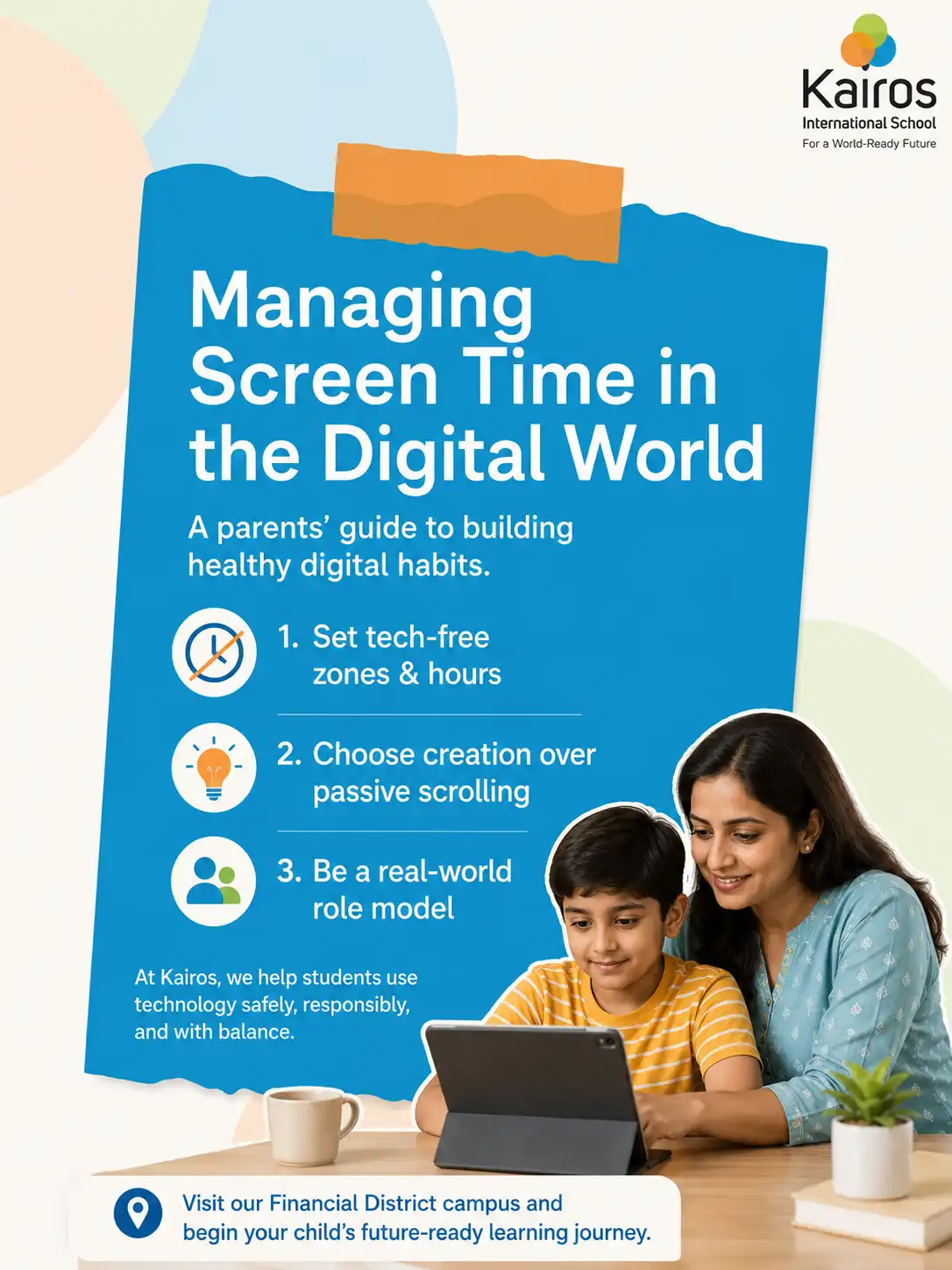
The parents’ guide to managing screen time in a digital world.
For many working families in Hyderabad, technology is an indispensable part of daily life. It drives our careers, keeps our homes connected, and organizes our hectic schedules. However, back at home, this reliance on technology often initiates a common family battleground: managing screen time. We watch our children slide into hours of mindless scrolling, wondering if they are spending too much time locked away in a virtual space.
The immediate reaction might be to completely confiscate devices, but in a modern world, this is rarely a practical option. Digital literacy and Screen time management are core 21st-century capabilities, just as essential as learning how to read or solve a mathematical equation. The real challenge for parents is not removing technology, but helping children establish a healthy relationship with it. We want them to view devices as tools for creative growth rather than endless sources of passive distraction.
Here are three direct, practical ways to establish healthy digital boundaries in your home without creating constant friction.
1. Designate Clear Tech- Free Zones and Hours at Home
When portable devices follow children everywhere, from the living room couch to the dinner table and into bed, behavior boundaries disappear completely. The easiest way to regain control is to establish clear physical spaces and specific hours during the day where devices are strictly put away.
The Dinner Table:
Make family meal times a strict device-free zone for both children and parents. This basic boundary preserves an important space for real, face-to-face communication and connection after a long day.The Bedroom:
Keep tablets, laptops, and smartphones out of the bedroom entirely overnight. The intense light from a handheld screen disrupts natural sleep cycles, making it incredibly difficult for a child to wake up feeling rested and ready for school.The Arrival Routine:
Establish a rule where the first hour after getting home from school is completely free of any screen time or digital input. This provides your child with a necessary window to unwind, enjoy a healthy snack, and talk about their afternoon before an interface takes over their attention.
Setting up these structural spaces helps children learn to naturally detach from the constant urge to check their notifications or watch another video.
2. Shift Focus from Passive Consumption to Active Creation
Not all hours spent in front of a monitor are created equal. There is a massive psychological difference between a child who spends two hours passively watching short entertainment videos and a child who spends two hours learning how to write computer code, edit a video project, or read an educational text.
Spend some time observing how your children actually interact with their personal devices. Encourage them to step away from passive viewing and steer their focus toward active production:
- Interactive Design:
Introduce them to strategic puzzles, logical games, or online tools that teach them basic coding or a new language. - Creative Construction:
Encourage them to use digital learning tools to draw digital artwork, write stories, compose audio tracks, or research a scientific topic they find fascinating.
When parents shift the focus from how long a child is on a screen to what they are doing with that time, a device stops being a distraction and becomes an incredible tool for intellectual exploration.
3. Be a Real-World Role Model
Children are incredibly observant. If they constantly see their parents answering non-urgent work emails during dinner, checking social media during family conversations, or staring at a phone screen while trying to play a board game, they will naturally mimic that behavior.
To build healthy tech habits in your children, you must practice mindful usage yourself. Try designating a personal “blackout hour” every evening where you put your phone in another room and give your family your undivided, physical attention. When your child sees you making a conscious decision to value real-world conversation over a glowing screen, they realize that life outside the digital space is worth engaging with.
Preparing for Tomorrow
At Kairos, we firmly believe that modern technology is an incredible asset when handled with clear intent. As a forward-thinking international school, our smart classrooms and ICT facilities are carefully integrated into the learning experience. Through modern frameworks like our COMPASS program, we don’t just hand over a tool, we explicitly teach students digital safety, media literacy, and responsible citizenship in today’s evolving digital world.
By taking these basic, intentional steps at home, parents reinforce the exact values we nurture on campus. All together, we can guide the children to build healthy online safety habits and navigate the digital ecosystem safely, confidently, and with a healthy sense of balance.
Step Into a Future-Ready Learning Journey for Your Child
Looking for a school that truly balances screen time management with holistic development and future-ready learning?
Discover how Kairos International School empowers students through a strong digital education ecosystem, value-based learning, and essential life skills that shape confident individuals. Step into a campus where technology and tradition work together.
Visit us in the Financial District today and begin your child’s admission journey.